CQC registration
CQC Registration for Care Homes and Nursing Homes
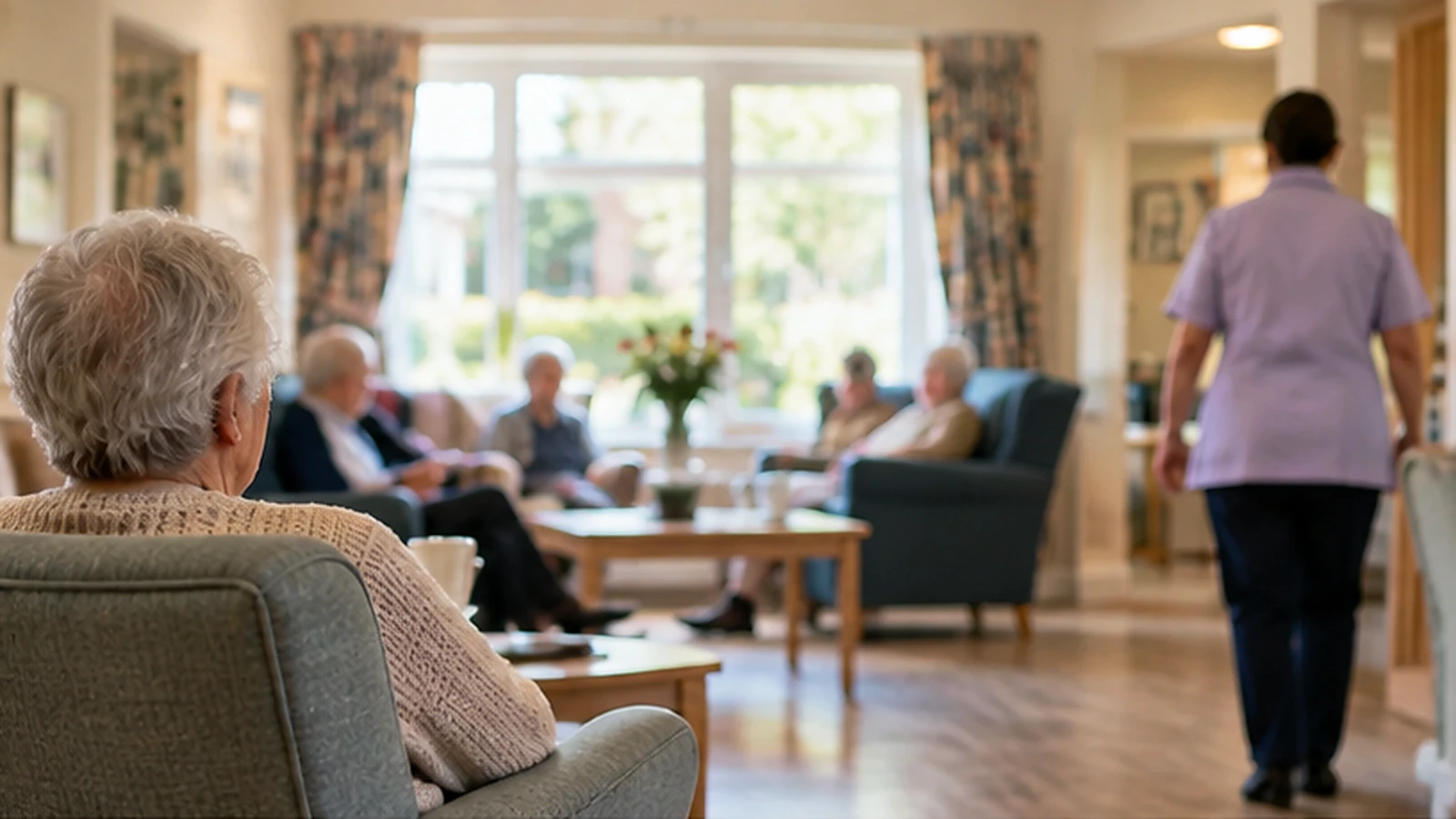
Opening a care home in England requires more than registering a business or finding a suitable building. Before residents can receive regulated care, the legal provider must have the correct Care Quality Commission (CQC) registration for the premises, service and activities it intends to deliver.
The requirements differ in important ways between residential care homes without nursing and care homes with nursing. These differences affect the regulated activities, registration conditions, staffing model and evidence CQC will assess.
This guide concentrates on those care-home-specific decisions. For the general application sequence, see How to Register with CQC: A Step-by-Step Guide.
Which regulated activity does a care home need?
The main regulated activity for a care home is Accommodation for persons who require nursing or personal care.
Under CQC's scope guidance, this applies where accommodation is provided together with nursing or personal care as one package. Residents cannot simply keep the accommodation and choose an entirely separate personal-care provider.
This is different from supported living, where housing and personal care are genuinely separate arrangements. The description on your website does not determine the category. The actual contractual and care model does. If you are unsure which model you are creating, use the Regulated or Unregulated checker as an initial guide to scope.
A provider carrying on the accommodation-and-care activity does not generally add separate registrations for Personal care or Nursing care merely because those tasks form part of that package. However, a nursing home may need another regulated activity for clinical treatment.
Residential care home or nursing home: what changes?
Both may register for the accommodation-and-care activity, but the nursing model has additional implications.
Residential care without nursing
Accommodation and personal care, without the home itself providing nursing care. CQC routinely attaches a no nursing condition.
Care home with nursing
A home employing registered nurses to provide or supervise treatment will often also need registration for Treatment of disease, disorder or injury.
A residential care home without nursing
A residential care home normally provides accommodation and personal care without itself providing nursing care. CQC routinely attaches a no nursing condition to this type of registration.
That condition matters. A provider cannot decide later to operate as a nursing home simply by recruiting nurses, changing its marketing or accepting residents with higher needs. It must first consider whether its registration conditions and regulated activities need to be changed.
Residents may receive care from external healthcare professionals, including appropriately delegated tasks. That is not automatically the same as the residential home itself carrying on a regulated clinical treatment activity.
A care home with nursing
A home employing registered nurses to provide or supervise treatment for disease, disorder or injury will often also need registration for Treatment of disease, disorder or injury. CQC's guidance recognises exceptions, so the activity should be determined by the actual treatment and professional responsibilities, not the word "nursing" alone.
The service must also demonstrate appropriate clinical leadership, registered nursing cover, medicines processes, escalation arrangements and governance suitable for residents' assessed needs.
The central decision is whether the provider is equipped to deliver nursing care as part of its service, rather than relying on nursing input from an external provider.
The building is the CQC registration location
For a care home, the premises where residents live and receive care will normally be the registered location. This differs from homecare or supported living, where the registered location is usually the office managing care delivered in people's own homes.
CQC will need to understand the address, the proposed service, the people who will live there and how the premises are suited to their needs.
Its application guidance also describes a routine numbers condition, limiting how many people may be accommodated to receive nursing or personal care at that location.
This makes the proposed resident capacity a regulatory matter, not simply a commercial target. Do not assume that the number of bedrooms, a seller's advertised bed count or a spreadsheet's occupancy forecast will automatically become the approved capacity.
What must be resolved about the premises before applying?
CQC expects the building to be ready, or very nearly ready, for the proposed service. It does not accept an application simply to hold a place while significant building work, equipment or other essential arrangements remain outstanding.
Before committing substantial capital, investigate:
Legal use and occupancy
Confirm the provider has permission to operate a care home there, including any relevant planning or change-of-use position and landlord or mortgage consent.
Safety and suitability
Consider fire precautions, means of escape, accessibility, infection prevention, moving and handling, water safety and the needs of the intended residents.
Capacity and layout
Match proposed numbers and resident groups to room sizes, shared facilities, staffing arrangements and safe circulation.
Works and certification
Check whether building-control approval, remedial works or updated certificates will be needed, and whether these can realistically be completed before applying.
A property can be attractive commercially yet unsuitable for the service you intend to register. Buying first and resolving suitability later transfers that risk to the new provider.
Who applies: the company, the owner or the manager?
CQC registers the legal provider responsible for carrying on the regulated activity. For a limited-company care-home operator, that will usually be the company, not automatically its shareholder or director.
Organisations and partnerships generally need a registered manager responsible for day-to-day management of the regulated activities. The proposed manager must demonstrate suitability, skills and experience for the actual service. Being experienced in residential care does not, by itself, establish competence to lead every nursing or specialist service.
The provider and relevant registered-manager applications must be coordinated. You cannot treat the manager as somebody to appoint after CQC has approved a service that requires one.
Legal provider
- Usually the company, not automatically its shareholder or director
Not the same role
You cannot treat the manager as somebody to appoint after CQC has approved a service that requires one.
Registered manager
- Day-to-day management, with suitability for the actual service
For the specific suitability tests, see CQC Registered Manager Requirements.
What supporting documents are specific to care homes?
CQC's June 2026 care-home document guidance requires additional items alongside the documents all new providers must send:
Ten items required with the application
- Business continuity plan
- Environment risk assessment
- Evidence of legal occupancy
- Fire risk assessment
- Floor plan
- Gas and electrical safety certificates
- Legionella risk assessment
- Planning permissions
- Service-user guides
- Staff training plan
CQC may ask during assessment
- Business plan and forecast
- Admission policy
- Sample care plan
- Staffing structure and rotas
- Other operational evidence
These ten extra items are required in addition to CQC's core new-provider documents. Check CQC's current instructions for what each item must demonstrate and whether a particular permission or certificate applies to your premises.
Where a service is specifically for autistic people or people with a learning disability, further policies and an additional form apply.
CQC also identifies documents it may ask to see during assessment rather than requiring them all with the initial submission. These include a business plan and forecast, admission policy, sample care plan, staffing structure and rotas, and other operational evidence.
This distinction matters. Sending a large pack of irrelevant policies is not evidence of readiness. Equally, documents requested later must exist and describe a service that is genuinely prepared to operate.
For the complete core list and document-quality requirements, use CQC Registration Supporting Documents.
How ready must a new care home be before registration?
CQC recognises that a brand-new home cannot demonstrate a history of delivering care to residents it has not yet admitted. It still needs persuasive evidence that the home could operate safely when registered.
The practical questions include:
Questions about readiness
Is a suitable manager in place, with clear responsibility and oversight?
Are recruitment, training and staffing arrangements credible for the proposed resident group and occupancy?
Are medicines, safeguarding, complaints, consent, care planning and emergency systems ready to use?
Can staff explain how those systems would work in the particular building?
Are the premises safe, equipped and available for assessment?
Does the Statement of Purpose accurately reflect the service that could open?
An impressive set of policies does not compensate for a building that is not ready or a management model that cannot be delivered. CQC may examine the premises and speak to the people responsible for operating the service.
CQC says the assessment itself can take a few months, sometimes longer. Registration must be granted before the provider starts carrying on the regulated activities.
Registration approval is not the same as commercial viability
The biggest financial commitments can arrive before the first resident does: property purchase or lease costs, conversion works, utilities, insurance, recruitment and operating reserves.
For a care home, even a small difference in achievable occupancy or the fee per resident can materially affect the business plan. A nursing model may command different fees but also carries different staffing and clinical costs.
Research local demand, competing capacity, fee levels, resident needs and likely referral routes before choosing the property and proposed service. In particular, distinguish demand for standard residential care from demand for nursing, dementia or specialist provision. Those are not interchangeable markets.
Registration Compare's Should I Start? Market Report is designed to help assess the local demand and supply position before you commit to registration expenditure.
The practical starting point
Before drafting the application, settle four matters: the residential or nursing model, the legal provider and manager, the suitability and capacity of the premises, and the financial case for the home in its local market.
- Residential or nursing model
- Legal provider and manager
- Suitability and capacity of the premises
- Financial case in the local market
Once those are clear, you can decide whether to manage registration yourself or use a specialist. Registration Compare helps you compare specially selected and verified CQC registration specialists and the scope of support offered.
Regulatory references reviewed: CQC Scope of registration (August 2026); Accommodation for persons who require nursing or personal care (May 2026); Applying as a new provider (March 2026); Care-home supporting documents (June 2026); What is a location? (April 2026). Always check current CQC guidance before applying.
Frequently asked questions
Can I apply for a care home before I have residents?
Read the answer
Yes, a new service will often apply before opening to residents. But the premises, management, staffing arrangements and systems must be ready enough for CQC to assess. CQC is not offering approval for a speculative concept.
Is a dementia care home a separate CQC regulated activity?
Read the answer
Not simply because it is described as a dementia home. The legal activities depend on the accommodation, care and treatment provided. The intended resident group still matters enormously for premises, staff capability and operational readiness.
Can I turn a residential care home into a nursing home later?
Read the answer
Potentially, but that can require changes to the registration conditions and regulated activities as well as the staffing and premises arrangements. Do not provide nursing care outside the permissions that apply to the registration while those changes are unresolved.
Settle the model before you draft the application.
The residential or nursing model, the legal provider and manager, the premises, and the financial case for the home in its local market.