CQC registration
CQC Registration for Dental Practices: What New Providers Need to Know
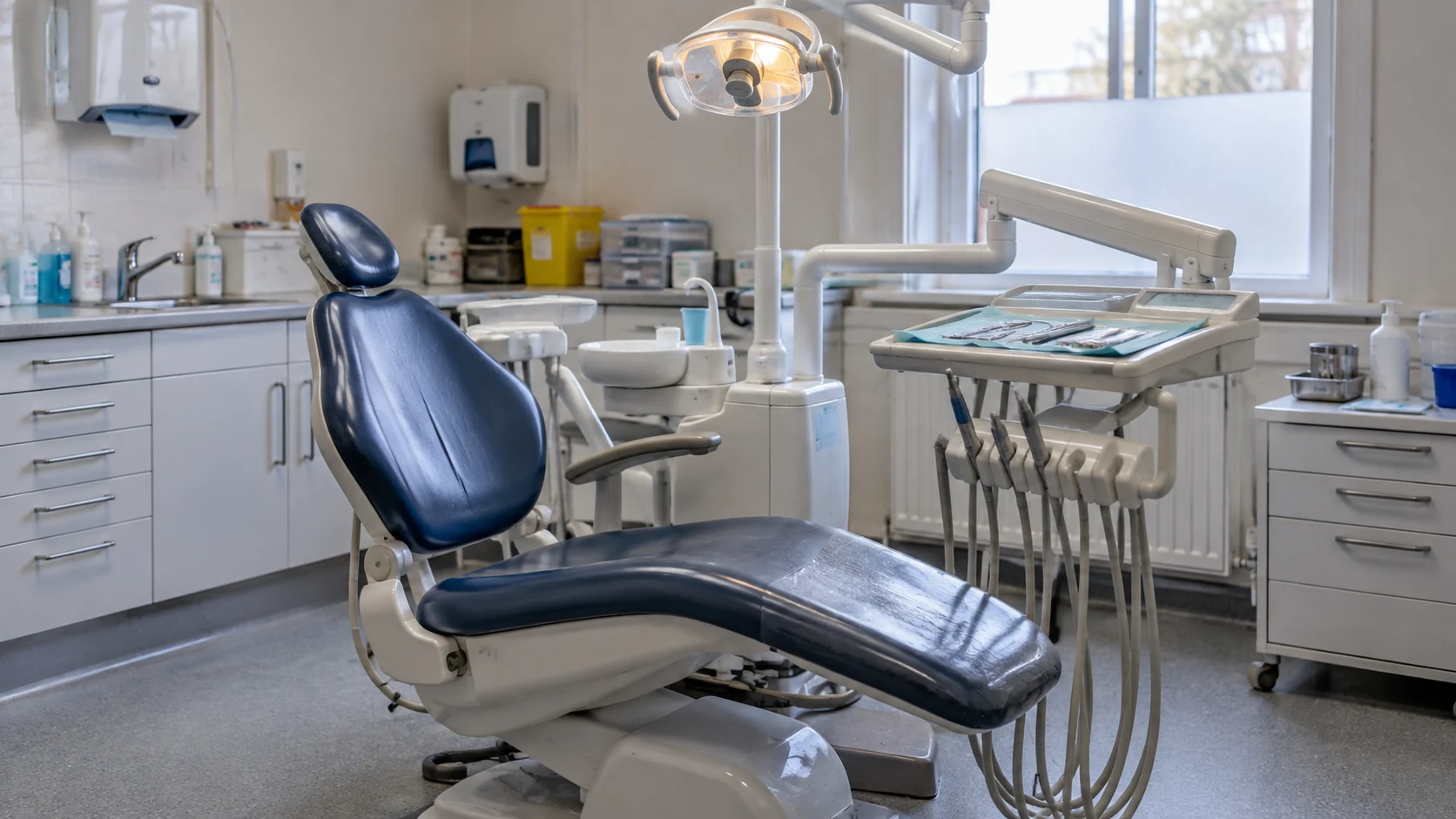
Opening a dental practice in England involves more than registering individual clinicians. If your business will carry on CQC-regulated dental activities, the legal entity providing the care must hold the appropriate Care Quality Commission (CQC) registration before those activities begin.
For most general dental practices, the difficult questions are not whether CQC is relevant, but who should be registered, which activities to select, who will manage them, and whether the premises and clinical evidence are ready. Oral-health applicants also have a specific set of supporting-document requirements that generic registration checklists can miss.
This guide focuses on those dental decisions. For the full application sequence, see our step-by-step CQC registration guide.
Who needs to register: the dentist, partnership or company?
CQC registers the provider carrying on the regulated activities, not the practice's trading name. That provider may be:
An individual
For example, a dentist operating the service as a sole trader, personally responsible for the regulated activities.
A partnership of individuals
The partners genuinely carry on those activities together and accept joint and several responsibility. Dentists merely sharing rooms, expenses or a reception team do not automatically form a registrable partnership.
An organisation
For example, a limited company or limited liability partnership (LLP) operating the practice. An LLP is treated as an organisation for CQC registration, not as a partnership of individuals.
The important test is who is legally responsible for delivering the regulated care. The name above the door, the landlord, the NHS contract-holder and the person who owns the dental chairs are not necessarily the same entity.
A clinician's General Dental Council (GDC) registration is separate from the practice provider's CQC registration. Having GDC-registered dentists, nurses and hygienists does not substitute for CQC registration of the provider. Equally, CQC registration does not replace professional obligations.
Before preparing forms, write down the precise applicant name and legal structure, and check that it agrees with the people contracting with patients, employing staff and governing clinical care. CQC explains the differences between individuals, partnerships and organisations.
Which regulated activities does a dental practice need?
A typical dental service may need to register for three regulated activities, but the correct selection depends on what it will actually do:
- 01
Treatment of disease, disorder or injury
This commonly covers clinical dental assessment and treatment.
- 02
Surgical procedures
Relevant where the service carries on procedures within CQC's surgical activity, such as dental surgical treatment.
- 03
Diagnostic and screening procedures
Relevant to dental X-rays and intraoral scans used to create 3D tooth images for restorations, appliances or orthodontic assessment. CQC's March 2026 scope guidance expressly includes intraoral scanning; select the activity against the procedures your practice will actually carry out.
CQC's quick guide to regulated activities identifies these as the activities most likely to be relevant to dental services. It is a starting point, not a reason to tick all three without reviewing your actual model.
For example, a general practice providing restorative dentistry, extractions and radiographs may have a different activity profile from a service with a deliberately narrower scope. If you plan to add oral surgery, mobile dental care or a separate clinical service later, assess the activities and locations again.
Your application, statement of purpose, clinical policies and service description should all describe the same real service. Inconsistency between those documents makes it harder for CQC to understand what you intend to provide.
If the boundary is unclear, try Registration Compare's free Do I need CQC registration? checker, then confirm any nuanced activity decision against CQC's scope guidance.
Premises, locations and dental chair numbers
CQC registration specifies where regulated activities will be carried on. For a conventional practice, this will usually include the dental surgery premises. If you operate several practices, do not assume one address on the application automatically covers them all. The registered locations and activities must reflect where care is delivered.
The premises need to be genuinely ready for assessment. CQC says applicants should only apply once their location and staffing arrangements are in place to start the proposed service. A projected opening date is not enough if essential clinical facilities or evidence still need to be completed.
Dental chair numbers also matter administratively. CQC's application guidance asks a single-location dental provider for the number of chairs used to carry on dental regulated activities, because this informs its annual fee band. A domiciliary provider with no dental chairs of its own is directed to enter zero. The instructions differ for multi-location providers, so follow the relevant application form rather than guessing a total.
Think through your actual delivery model before writing the statement of purpose:
Questions about the delivery model
Is all treatment delivered at one surgery, or are there satellite or visiting arrangements?
Will radiography take place on site?
Will any dentistry be provided in people's homes or care homes?
Do the people, facilities and equipment named in your application match what will be available on opening?
The answers affect the description of your service, its location arrangements and the evidence CQC may want to see.
Who must be the registered manager?
The registered provider and registered manager are different roles.
Organisations and partnerships generally need a registered manager for the regulated activities they provide. An individual provider who is personally in day-to-day charge and meets the relevant requirements may not need a separate registered manager. A company director who happens to be a dentist should not assume that their professional qualification removes the registered-manager requirement for the company.
A registered manager must be able to demonstrate the capacity, skills and experience to oversee the relevant activities and locations. If the practice is company-operated, it must also identify a nominated individual, a suitably senior person who represents the organisation to CQC.
A single person may hold more than one role where the requirements are met, but job titles are not substitutes for demonstrating actual oversight. Resolve the management structure before submission because required manager forms accompany the provider application.
For the role and application implications, see our guide to CQC registered manager requirements and CQC's registration definitions.
The dental-specific documents people overlook
This is an important difference from a generic healthcare application checklist.
CQC's oral-health supporting-document guidance, updated 15 June 2026, lists seven extra items to submit as well as the documents required from all new providers. CQC also says oral-health applicants must complete the additional oral-health services form. Check the latest version on CQC's provider application forms page.
CQC distinguishes those submission requirements from material it may ask to see later. Keep relevant evidence ready, but do not automatically attach the whole reserve folder to the initial application.
Seven items to submit
- Critical examination and acceptance test reports
- Fire risk assessment
- Health and Safety Executive ionising radiations regulations registration
- Health and safety risk assessment
- Legionella risk assessment
- LOLER lift safety certificate, if applicable
- Radiography risk assessment and Local Rules document
CQC may ask during assessment
- Floor plans, electrical and emergency-lighting certificates, and a gas safety certificate where relevant
- Medical-emergency and resuscitation procedures, serious-incident arrangements and, for corporate providers, fit-and-proper-persons director policy
- Equipment installation and calibration evidence, including decontamination equipment, suction and amalgam separation, ventilation where installed, and pressure-vessel testing for autoclaves and compressors
This is a practical reason to check the dental-specific CQC page rather than rely on an old downloaded checklist or a policy-pack sales page. The documents need to relate to your premises, equipment and services, not simply contain dental terminology.
CQC can request other evidence depending on your circumstances. Its oral-health document requirements should be the live reference, alongside the core documents required from all new providers. Our supporting-documents guide explains the broader preparation principles.
Show how the dental service will work safely
An application is not merely a set of completed fields. CQC is assessing whether your proposed service will be safe, effective, caring, responsive and well-led.
For a dental provider, that means being ready to explain who will oversee infection prevention, instrument decontamination, radiation protection, medical emergencies, consent, medicines and prescribing, clinical records, safeguarding, complaints and incident learning. These subjects matter because they are part of everyday dental care, not because every one requires a separate attachment on day one.
Consider the likely practical questions:
Questions about safe dental care
Can you show that radiography arrangements, local rules and relevant equipment tests reflect the actual installation?
Are decontamination processes and the responsibilities of trained staff clear?
What happens if a patient deteriorates or requires emergency assistance during treatment?
Who reviews incidents, complaints, safeguarding concerns and audit findings, and makes improvements?
Can the proposed manager explain how oversight works across clinicians, contractors and any additional locations?
The strongest answers are specific. A policy that says 'the registered manager will check compliance' is weak if the named person has not been appointed, cannot describe the process or has no credible time to carry it out.
New surgery, additional location or buying a practice?
These situations should not be treated as interchangeable.
Starting a brand-new practice
Identify the registering provider, proposed activities, premises and leadership from the outset.
Opening another surgery
Under an existing provider, check whether you need to vary existing registration conditions or add a location before services start there.
Buying a practice
Do not assume the seller's registration transfers automatically with the lease, patients or business assets. The answer depends on which legal entity will carry on the activities after completion.
The transaction-specific route deserves separate advice, particularly where a registered manager and opening date must be coordinated. The immediate point is to establish who will be the registered provider on the first day of care.
How long should dental CQC registration take?
Do not set a launch date on the assumption that a complete application will be approved within a fixed number of weeks. CQC does not guarantee a decision date. Preparation, submission, assessment and any requests for further information can extend the overall journey, and the provider must not begin regulated activities before registration is confirmed.
You can reduce avoidable delay by preparing the correct entity and manager applications, using current forms, aligning activities and locations, and submitting the oral-health evidence CQC now asks for. That does not guarantee a decision date. If an application is incomplete, CQC may return it instead of progressing the assessment.
A useful dental pre-submission check
Before you submit, confirm five things:
Provider
The individual, true partnership or organisation named is the entity actually delivering care.
Scope
Each proposed regulated activity matches the dental treatments, surgery and diagnostics you will provide.
People and place
The manager and nominated individual arrangements, location details and dental chair declaration are accurate.
Dental evidence
The seven oral-health extras, where applicable, and additional oral-health form are accounted for alongside the core pack.
Operational readiness
Your premises, equipment, governance and patient-safety systems are demonstrably ready, not just planned.
If one answer remains uncertain, resolve that specific issue before spending time polishing a generic application pack.
Compare support from dental-experienced registration specialists
Some new dental providers prepare their registration themselves; others want help with activity selection, documents, manager applications or a final pre-submission review. If you seek support, ask for recent oral-health registration experience and make the scope of the quote explicit. In particular, establish whether the specialist reviews the radiation and premises evidence, or expects you to obtain and validate it independently.
Get your free Registration Compare proposal. The tool includes a Dental service option and lets you explain your stage and the help you need. The service helps you assess the scope, experience and fees of specially selected and verified CQC registration specialists before deciding whom to speak to.
This guide concerns CQC registration of dental services in England. Specific activity and registration decisions depend on the service provided and current CQC requirements.
Frequently asked questions
Does GDC registration replace CQC registration for a dental practice?
Read the answer
No. A clinician's General Dental Council registration is separate from the practice provider's CQC registration. Having GDC-registered dentists, nurses and hygienists does not substitute for registration of the legal provider. CQC registration does not replace professional obligations either.
Which regulated activities does a typical dental practice need?
Read the answer
A typical dental service may need Treatment of disease, disorder or injury, Surgical procedures, and Diagnostic and screening procedures. The last of those covers dental X-rays and intraoral scans. The correct selection depends on what the practice will actually do, so do not tick all three without reviewing the model.
What extra documents do oral-health applicants submit?
Read the answer
CQC's oral-health guidance, updated 15 June 2026, lists seven extra items as well as the documents required from all new providers. Applicants must also complete the additional oral-health services form. CQC may ask to see further premises and equipment evidence during assessment rather than with the initial submission.
Does buying a dental practice transfer its CQC registration?
Read the answer
Do not assume the seller's registration transfers automatically with the lease, patients or business assets. The answer depends on which legal entity will carry on the activities after completion. Establish who will be the registered provider on the first day of care.
Does CQC guarantee how long dental registration will take?
Read the answer
No. CQC does not guarantee a decision date. Preparation, assessment and requests for further information can extend the journey, and regulated activities must not begin before registration is confirmed. An incomplete application may be returned rather than assessed.
Match the provider, activities and dental evidence.
Oral-health registration needs the right legal entity, the activities the practice will actually carry on, and the extra documents CQC asks for.